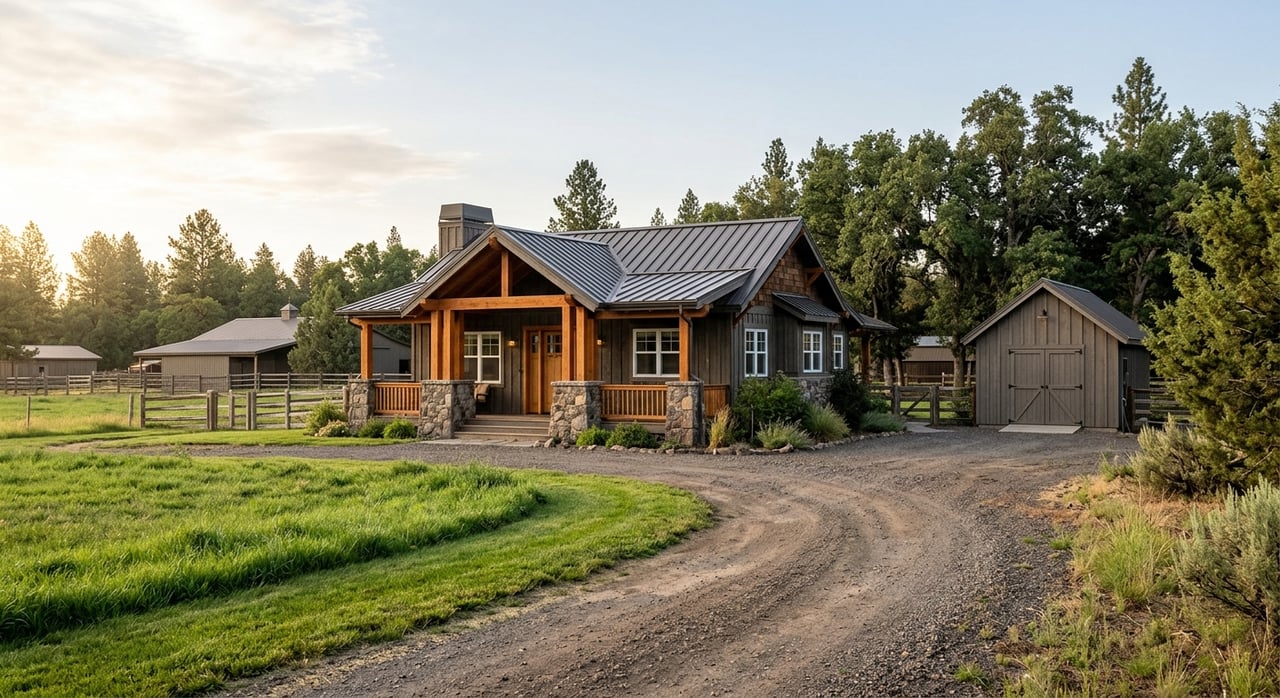
Buying a ranchette or small farm in Durham can feel exciting and a little overwhelming at the same time. You are not just buying a house. You are often buying acreage, utilities, access, zoning limits, and a different kind of lifestyle than you would find on a standard city lot. The good news is that with the right research, you can move forward with much more confidence. Let’s dive in.
Why Durham Is Different
Durham is an unincorporated community in Butte County, which means county rules matter more than city rules for most parcel questions. If you are looking at a ranchette or small farm here, you need to think beyond square footage and price.
Durham inventory also sits in a different category than nearby Chico housing. According to Redfin's Durham market data, Durham had 14 homes and 7 land listings, with a February 2026 median sale price of $1,075,000. In comparison, Chico's February 2026 median sale price was $460,750, which shows how much acreage, utilities, and land use can affect value in Durham.
Start With the Parcel
Before you get attached to a property, confirm exactly what the parcel is. In rural areas, one listing can look similar to another online, but the legal and practical differences can be huge.
Butte County says zoning controls allowed uses and development standards, and its Parcel Look-Up Tool and zoning resources can help you verify zoning, acreage, General Plan details, flood zones, Williamson Act layers, SRA, and WUI information. The county also notes that some parcels can be multi-zoned, so you should not assume the entire property is governed the same way.
Check zoning before plans
If you are hoping to keep animals, add structures, plant crops, or explore future building potential, start with zoning. Butte County's planning FAQ says you should use the APN to confirm whether the parcel is in the county or a city and whether it has more than one zone.
Rural zoning categories can include large minimum parcel sizes. The county's residential site development standards show that some rural zones range from 1 acre to 40 acres, while others range from 5 to 10 acres or 1 to 2.5 acres, depending on the district. Those standards are important, but they should be treated as a framework to verify, not a shortcut for assuming what any one parcel allows.
Watch for agricultural buffers
One detail many buyers miss is the agricultural buffer requirement. Butte County requires a 300-foot agricultural buffer between residential dwellings and agricultural uses in certain situations, and the Planning Division and Agricultural Commissioner may review site plans for compliance.
That matters because a parcel may seem ideal on paper, but your building area or future plans could be shaped by buffer rules. If you are buying land with long-term goals in mind, this is one of the first items to verify.
Understand Durham Water Options
Water is one of the biggest questions in any ranchette or small-farm purchase. In Durham, the answer is not always simple.
Some properties may be served by Durham Irrigation District, some may rely on private domestic wells, and some may also include agricultural wells or irrigation systems. The state drinking water database identifies Durham Irrigation District as a Class C public water system serving the Durham area, with groundwater as its primary source.
Ask exactly where water comes from
You will want clear answers to questions like these:
- Is the home connected to Durham Irrigation District?
- Is there a private domestic well?
- Is there a separate agricultural well?
- Is there an existing irrigation setup on the property?
- Are there documents that support how the system is installed and used?
Current Durham land listings on Redfin show how varied this can be. One active parcel advertises a 40 HP agricultural well and solid-set irrigation, while another 17-acre orchard notes domestic and agricultural wells plus septic. That range is exactly why buyers should verify utility details instead of relying on a listing summary alone.
Septic and Well Permits Matter
Many Durham ranchettes and small farms involve private utility systems, which means permits and site conditions matter a lot. A beautiful property can still come with expensive surprises if key systems were never properly permitted or cannot be expanded the way you expect.
Butte County Environmental Health handles private domestic and agricultural wells, wastewater design and installation, and septic-related review. The county says private wells must be drilled and constructed under permit by a licensed C-57 contractor, and Environmental Health is also the right place for septic and wastewater questions.
Verify existing systems
If the property already has a well or septic system, ask for records and confirmation of permit status. If the parcel is vacant, ask whether Environmental Health has indicated that a new septic system may be feasible.
This is also a good time to separate utility questions from boundary questions. Butte County notes that property lines and private easements should be checked through recorded parcel maps, deeds, title reports, and, when needed, a surveyor. In rural transactions, those details can shape access, use, and future improvements.
Look Beyond the House During Inspections
A ranchette purchase usually needs a wider inspection lens than a standard suburban home. You are often evaluating both the residence and the land systems that support it.
Butte County's permit portal and GIS tools can help you review permits, inspections, and land-use data such as flood zones and WUI layers. That information can help you build a more complete due diligence plan.
What to review carefully
Depending on the property, your due diligence may include:
- Well condition and permit history
- Septic condition, permit history, or feasibility
- Accessory structures and whether they appear permitted
- Recorded easements and legal access
- Setbacks and site limitations
- Flood zone and WUI mapping
- Signs of irrigation infrastructure or agricultural improvements
In Durham, the land itself often drives a large part of the property's value. That makes these checks especially important.
Appraisals Can Be More Complex
Appraising a rural property is rarely as simple as pulling a few nearby sales. In a market like Durham, recent comparable sales may be limited, and available properties may differ widely in acreage, water systems, septic status, and improvements.
Fannie Mae states in its comparable sales guidance that comparable properties should be similar in physical and legal characteristics, and that for rural properties, appraisers may need to use sales from farther away when nearby data is limited. That point is especially relevant in Durham, where parcel types can vary a lot.
Why parcel details affect value
For a Durham ranchette or small farm, value may be shaped by:
- Acreage usability
- Exact zoning and legal buildability
- Water source and irrigation setup
- Septic status
- Outbuildings and site improvements
- Access and easements
This is one reason Durham should not be approached like a standard city-lot purchase. Nearby Chico listings can include lots as small as 4,791 or 8,712 square feet, while Durham inventory may include parcels over 15 or 17 acres. Those are very different valuation categories.
A Smart Buying Process for Durham
If you want to buy with confidence, it helps to follow a simple, disciplined process. Rural properties reward careful buyers.
Step 1: Confirm parcel facts
Start with the APN and verify zoning, acreage, overlays, and whether the parcel is in the county. Use county tools before making assumptions about use, subdivision, or future building plans.
Step 2: Verify water and septic
Identify whether the property uses district water, a domestic well, an agricultural well, or a mix. Then confirm septic status, permit history, and whether the current setup matches your intended use.
Step 3: Review land constraints
Check for agricultural buffers, flood zones, WUI layers, Williamson Act issues, and access concerns. These details can affect where and how the property can be used.
Step 4: Inspect improvements
Evaluate the home, outbuildings, fencing, irrigation equipment, wells, and any other site features that contribute to value or maintenance cost.
Step 5: Prepare for appraisal realities
Expect a more nuanced valuation process than you might see with a standard subdivision home. Thin inventory and varied parcel types can make rural appraisals more complex.
Why Local Guidance Helps
Buying in Durham is often about asking better questions early. That is where local experience can make a real difference.
When you work with a team that understands Butte County property patterns, county tools, and the difference between a standard home search and a land-based purchase, you can avoid costly assumptions. If you are thinking about buying a ranchette or small farm in Durham, connecting with Doug Speicher can help you sort through parcel details, utility questions, and the local market with a clear, practical plan.
FAQs
What zoning should you check before buying a Durham ranchette?
- You should verify the parcel's exact zoning, any overlay zones, and whether the property is multi-zoned by using the APN in Butte County's parcel and zoning tools.
What water sources are common for small farms in Durham?
- Durham properties may use Durham Irrigation District water, a private domestic well, an agricultural well, or a combination, so you should confirm the exact setup for each parcel.
What septic questions should you ask for a Durham small farm?
- You should ask whether there is an approved septic system, whether records are available, and if Environmental Health has reviewed the parcel for any future septic needs.
What land-use issues can affect a Durham acreage property?
- Buyers should check for agricultural buffers, flood zones, WUI layers, Williamson Act restrictions, easements, and access issues because each can affect how the land may be used.
What makes appraisals different for Durham ranchettes?
- Durham ranchettes often have fewer truly comparable nearby sales, so appraisers may need broader market-area comps and will often weigh acreage, utilities, and legal usability more heavily than in a standard suburban sale.