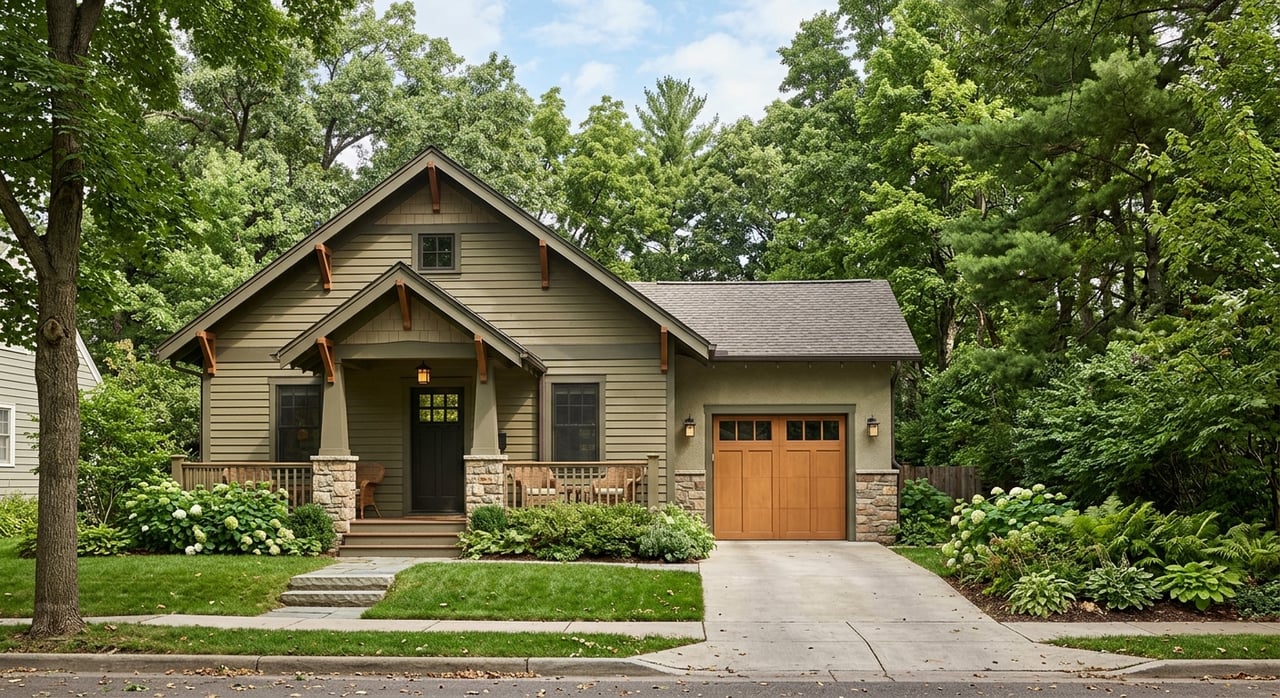
If you have been wondering whether it makes more sense to rent or buy in Chico right now, you are not alone. For many local buyers, the answer is not as simple as comparing a monthly rent payment to a mortgage estimate on a listing site. The real math depends on your income, your down payment, how long you plan to stay, and how much room you want in your budget for repairs and other housing costs. Let’s break it down.
Why rent vs. buy looks different in Chico
In Chico, current rent and home price data are not moving in lockstep. As of April 10, 2026, Zillow’s Chico rental market data shows an average rent of $1,575, with average rents of $1,020 for a studio, $1,195 for a one-bedroom, $1,450 for a two-bedroom, and $1,750 for a three-bedroom.
On the ownership side, Zillow’s home value index for Chico puts the average home value at $390,264 as of January 31, 2026. Redfin’s Chico housing market report shows a median sale price of $459,000 in February 2026, with homes selling in about 39 to 42 days and a 98.7% sale-to-list price ratio.
That gap matters. In simple terms, monthly ownership costs for a typical Chico home are currently well above average rent under standard assumptions. That does not mean buying is a bad move. It means you need to run the numbers carefully.
Start with the full monthly cost
When you compare renting to buying, the mortgage payment is only part of the story. The CFPB monthly payment worksheet recommends modeling all of your housing costs, including:
- Principal and interest
- Property taxes
- Homeowners insurance
- Maintenance
- HOA fees, if any
- Utility changes
That fuller view is especially important in Chico, where purchase prices can push the monthly payment well above what you might expect if you only look at principal and interest.
Sample Chico buying math
Let’s use the two common local reference points from the research report.
Example using Zillow home value data
Using Chico’s average home value of $390,264, a 20% down payment would be $78,053, leaving a loan amount of $312,211. At Freddie Mac’s 30-year fixed average rate of 6.37% as of April 9, 2026, principal and interest would be about $1,947 per month.
Now add Butte County property taxes using the 1.113% effective rate referenced in the research report, plus a maintenance reserve based on Freddie Mac’s 1% per year rule of thumb. That brings the pre-insurance monthly cost to about $2,634.
Compared with Chico’s average rent of $1,575, that is about $1,059 more per month before homeowners insurance, HOA dues, or utilities.
Example using Redfin sale price data
Using Redfin’s Chico median sale price of $459,000, a 20% down payment would be $91,800, leaving a loan amount of $367,200. At the same 6.37% rate, principal and interest would be about $2,290 per month.
After adding property taxes and a 1% maintenance reserve, the pre-insurance monthly cost rises to about $3,098. That is about $1,523 more than Chico’s average rent.
Don’t forget upfront cash
Your monthly payment is only one part of the decision. Buying also requires cash upfront for the down payment and closing costs.
According to Freddie Mac’s homebuying cost guide, down payments can range from 3% to 20%, depending on your loan and qualifications. The same source says closing costs generally run 2% to 5% of the purchase price.
For the $390,264 example, closing costs alone could be about:
- $7,805 to $19,513
For the $459,000 example, closing costs could be about:
- $9,180 to $22,950
That means your actual cash needed is not just the down payment. It is the down payment plus closing costs, and you still want reserves for moving expenses, repairs, and day-one setup.
What if you put less down?
A lower down payment can make buying more accessible, but it usually raises the monthly cost. Freddie Mac notes that if you put down less than 20%, you will likely pay mortgage insurance, which increases your monthly payment.
That is why two buyers looking at the same Chico home can have very different rent-vs-buy outcomes. If you put 3% to 5% down, your loan amount is larger, your payment is higher, and your cash cushion after closing may be smaller.
This does not automatically rule out buying. It just means you should compare a realistic monthly payment, not an optimistic one.
Use the 28% guideline carefully
The CFPB worksheet says your total monthly housing obligation should generally stay at or below 28% of your pre-tax income. Using Census QuickFacts for Chico, the city’s median household income is $66,977.
That works out to about $1,563 per month under the 28% guideline. By that benchmark, Chico’s average rent of $1,575 is already close to the limit for the median household.
The Zillow-based buy example at $2,634 is about 47.2% of median monthly income, and the Redfin-based example at $3,098 is about 55.5%. That helps explain why renting may feel more comfortable for many Chico households unless you have above-median income, a larger down payment, or both.
Census data offers a simpler gut check
If you want a broader comparison, Census QuickFacts shows Chico’s median selected monthly owner cost with a mortgage at $2,281, compared with median gross rent of $1,488.
That is a difference of $793 per month. It also shows owner costs with a mortgage at about 40.9% of median household income, compared with 26.7% for median gross rent.
This is not a perfect apples-to-apples comparison. Census owner cost includes mortgage-related housing costs, while gross rent may not include every extra bill a renter pays separately. Still, it supports the same general point: buying in Chico currently costs more per month than renting for many households.
Taxes can help, but not everyone benefits
Some buyers assume homeownership will create a large tax break. That can happen, but it depends on your situation.
According to IRS Publication 530, homeowners who itemize may be able to deduct qualified mortgage interest and state and local real estate taxes. But insurance, principal, utilities, and most closing costs are not deductible, and the publication notes an overall SALT deduction cap of $40,000 or $20,000 if married filing separately.
So when you run your numbers, it is smart to treat any tax benefit as a possible bonus, not a guarantee.
How long you plan to stay matters
Monthly cost is important, but time horizon matters just as much. Freddie Mac’s rent-or-buy guidance says buying may make more sense if you expect to stay in the home for at least five to seven years.
That longer timeline gives you more time to build equity and spread out upfront costs. If you think you may move sooner, renting often carries less financial risk and more flexibility.
In a market like Chico, where home prices are well above current average rents, your planned holding period can be the deciding factor.
Compare the right housing option
One common mistake is comparing a one-bedroom rent to the cost of buying a detached home with a yard and more square footage. That is not a fair comparison.
Instead, compare options that match your real lifestyle needs. Ask yourself:
- Are you comparing a one-bedroom rental to a starter home, or should you compare it to a condo or smaller property?
- Do you need two or three bedrooms now, or later?
- How important are stability, control over the home, or future space needs?
- Would you rather keep cash flexible for now?
The best decision is not always the mathematically lowest monthly payment. It is the option that fits your goals without stretching your budget too thin.
A practical Chico decision framework
If you are trying to decide whether to rent or buy in Chico, use this simple framework.
Renting may be the better fit if
- You want lower monthly housing costs right now
- You are still building savings for a down payment and closing costs
- You may move within the next few years
- You want to avoid repair risk and variable ownership costs
Buying may be the better fit if
- You expect to stay in Chico for five years or more
- You have a strong down payment and cash reserves
- You can comfortably handle taxes, insurance, and maintenance
- You want payment stability and the chance to build equity over time
Why local guidance still matters
Online calculators are helpful, but they cannot fully account for your income, loan structure, target price range, and the kinds of homes you are actually considering in Chico. They also cannot tell you how fast the local market is moving on the homes you want.
Redfin’s current market data shows Chico remains competitive enough that buyers should be prepared, preapproved, and ready to compare options carefully. If you are serious about buying, it helps to look at realistic monthly payment scenarios before you start touring homes.
If you want help comparing neighborhoods, price points, or starter-home options in Chico and nearby Butte County communities, Doug Speicher can help you look at real numbers and make a decision that fits your budget and timeline.
FAQs
How much does it cost to rent in Chico right now?
- According to Zillow’s April 10, 2026 Chico rental data, the average rent is $1,575, with averages ranging from $1,020 for a studio to $1,750 for a three-bedroom.
How much income supports housing costs in Chico under the 28% guideline?
- Using Chico’s median household income of $66,977, the CFPB’s 28% guideline works out to about $1,563 per month for total housing costs.
How much cash do you need to buy a home in Chico?
- Your cash needed usually includes your down payment plus closing costs, and Freddie Mac says closing costs typically run 2% to 5% of the purchase price.
What happens if you buy a Chico home with less than 20% down?
- Freddie Mac says putting down less than 20% will likely require mortgage insurance, which increases your monthly payment.
How long should you plan to stay in a Chico home for buying to make sense?
- Freddie Mac says buying often makes more sense if you expect to stay in the home for five to seven years or longer.
Are Chico property taxes just 1% of the home price?
- Not exactly. California’s Prop 13 framework starts with a 1% base rate, but Butte County property taxes also include additional assessments, and the research report cites an average effective rate of 1.113%.
Is buying always better than renting in Chico because you build equity?
- No. In Chico’s current market, buying can cost much more per month than renting, so the better choice depends on your timeline, down payment, income, and comfort with ownership costs.